How to Grow Basil in Pots
A practical guide to growing basil in pots, including warmth, light, watering, supermarket basil care, pinching, harvesting and autumn care.
Quick answer
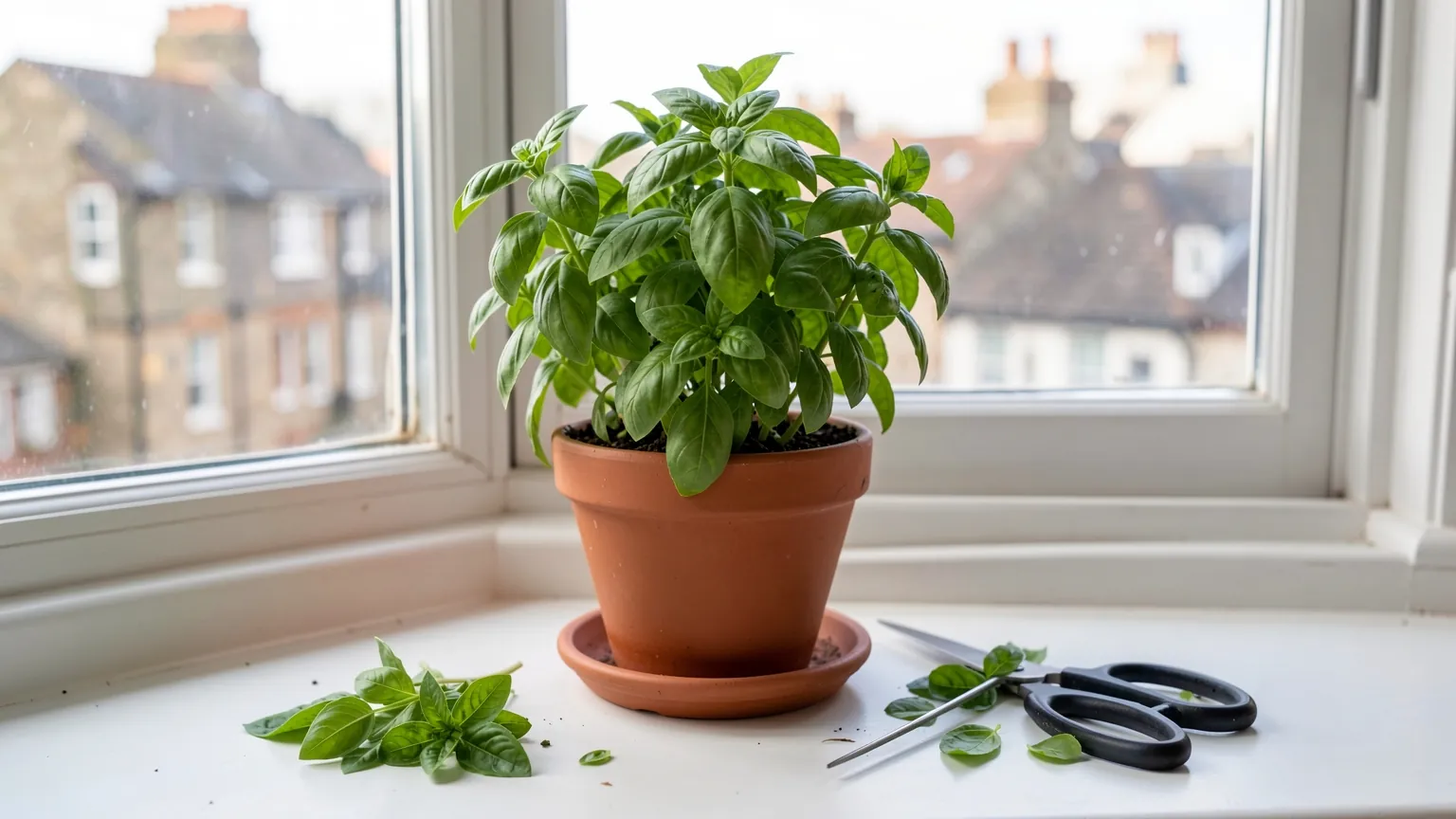
Basil grows well in pots if it has warmth, bright light and steady moisture without cold, wet compost. Use a pot with drainage, keep the plant away from draughts, pinch out the tips regularly and harvest leaves little and often. In the UK, basil usually grows best from late spring through summer.
Growing note: Basil hates cold. Do not put it outside permanently until nights are reliably warm.
Quick facts
| Best for | Sunny windowsills, warm patios, balconies and greenhouse shelves |
| Difficulty | Beginner-friendly if kept warm |
| Container | Individual pot or warm herb trough |
| Sunlight | Bright light and warmth |
| Best harvest | Pinch tips regularly for bushy growth |
Why basil is useful in small spaces
Basil is compact, fragrant and perfect near the kitchen. A single pot can supply leaves for pasta, salads, sandwiches and summer tomato dishes.
The main problem is that basil looks tougher than it is. Cold nights, wet compost and poor light can cause it to sulk or collapse.
Choosing a basil type
| Type | Best use |
| Sweet basil | Classic choice for everyday cooking |
| Greek basil | Small leaves and a neat compact shape |
| Thai basil | Warmth-loving with an anise-like flavour |
| Purple basil | Decorative but often a little more sensitive |
For a first pot, sweet basil or Greek basil is the simplest choice.
Starting basil from seed or buying a plant
Basil is easy to sow in warmth, but bought plants are convenient. Supermarket basil pots are often crowded with many seedlings. They can be harvested as they are, or divided carefully into smaller clumps and replanted into fresh compost.
Do not expect one supermarket pot to become a long-lived plant without more root space and better light.
Choosing a pot
Use a pot with drainage holes and a saucer. A 12–15cm pot can hold a small plant, but a larger pot is easier to keep evenly moist. If grouping herbs in a trough, keep basil with other herbs that like warmth and regular water.
How to plant basil
- Choose a warm bright position.
- Fill a pot with peat-free multi-purpose compost.
- Water the basil before repotting.
- Handle stems gently because they bruise easily.
- Plant at the same depth as before.
- Water lightly and let excess moisture drain.
- Keep the pot warm while the roots settle.
Where to put basil
A sunny windowsill, greenhouse shelf or sheltered patio is ideal. Basil needs warmth as much as light. Avoid cold glass in early spring, draughty doorways and exposed balconies.
Watering basil
Keep the compost lightly moist, not saturated. Basil dislikes being bone dry, but cold wet compost can rot the roots.
- Water at the compost level.
- Let excess water drain away.
- Avoid leaving the pot sitting in water.
- Check small pots often in summer.
How to harvest basil
Pinch out the growing tips just above a pair of leaves. This encourages side shoots and a bushier plant. Avoid picking only the largest lower leaves while allowing one tall stem to form.
Harvest little and often. Once flower buds appear, pinch them out if you want to keep producing leaves.
Growing basil with tomatoes
Basil and tomatoes are a classic kitchen pairing, but they do not need to share the same pot. A tomato plant usually needs all the root space in its container. Place a separate basil pot nearby instead.
For tomato pot guidance, see how to grow tomatoes in containers.
Basil in autumn and winter
Basil is an annual that is sensitive to cold, so outdoor plants usually decline once autumn nights turn chilly. In a tiny garden, the simplest approach is to bring a pot inside before the cold sets in and treat it as a windowsill herb for as long as it stays productive.
- Move outdoor pots indoors before nights turn cold, not after the leaves have blackened.
- Choose the brightest, warmest windowsill you have, away from radiators blasting heat and cold glass at night.
- Water less often than in summer, as cool compost dries slowly and wet roots rot easily.
- Keep pinching tips and use the leaves while they are good.
- Expect slower growth. Short, dull days mean a winter plant will not be as lush as a summer one.
If a plant becomes leggy and tired by midwinter, harvest what is left and start again with a fresh sowing or young plant in spring.
Common problems
Basil suddenly collapses
Cold, overwatering or a crowded supermarket root ball may be the cause. Move the plant somewhere warmer and check drainage.
Leaves turn yellow
The compost may be waterlogged, the plant may be hungry, or light may be weak. Check the roots and growing position.
The plant becomes tall and thin
It needs stronger light and more regular pinching. Move it brighter and pinch the top growth.
Leaves are being eaten
Slugs may attack outdoor pots. Check around the container in the evening.
A simple basil plan
Keep one pot on a warm sunny windowsill and one outside in summer once nights are warm. Pinch the tips weekly, use the leaves fresh and replace tired plants with a new sowing or young plant.
Find the right herb for your light
Use the grow finder before filling a windowsill with herbs that need different conditions.
FAQs
Can basil grow indoors?
Yes, if it has a warm bright windowsill. Weak light and cold draughts are the main problems.
How often should I water basil?
Water when the top of the compost begins to dry. Do not follow a fixed schedule without checking the pot.
Should I let basil flower?
If you want leaves, pinch out flower buds. Flowering usually reduces leaf quality.
Can basil grow outside in the UK?
Yes in warm summer conditions, but only after nights are reliably mild and the plant has been hardened off.
Growing note: Basil is simple when it is warm, bright and lightly moist. Most problems start with cold, wet compost or weak light.